

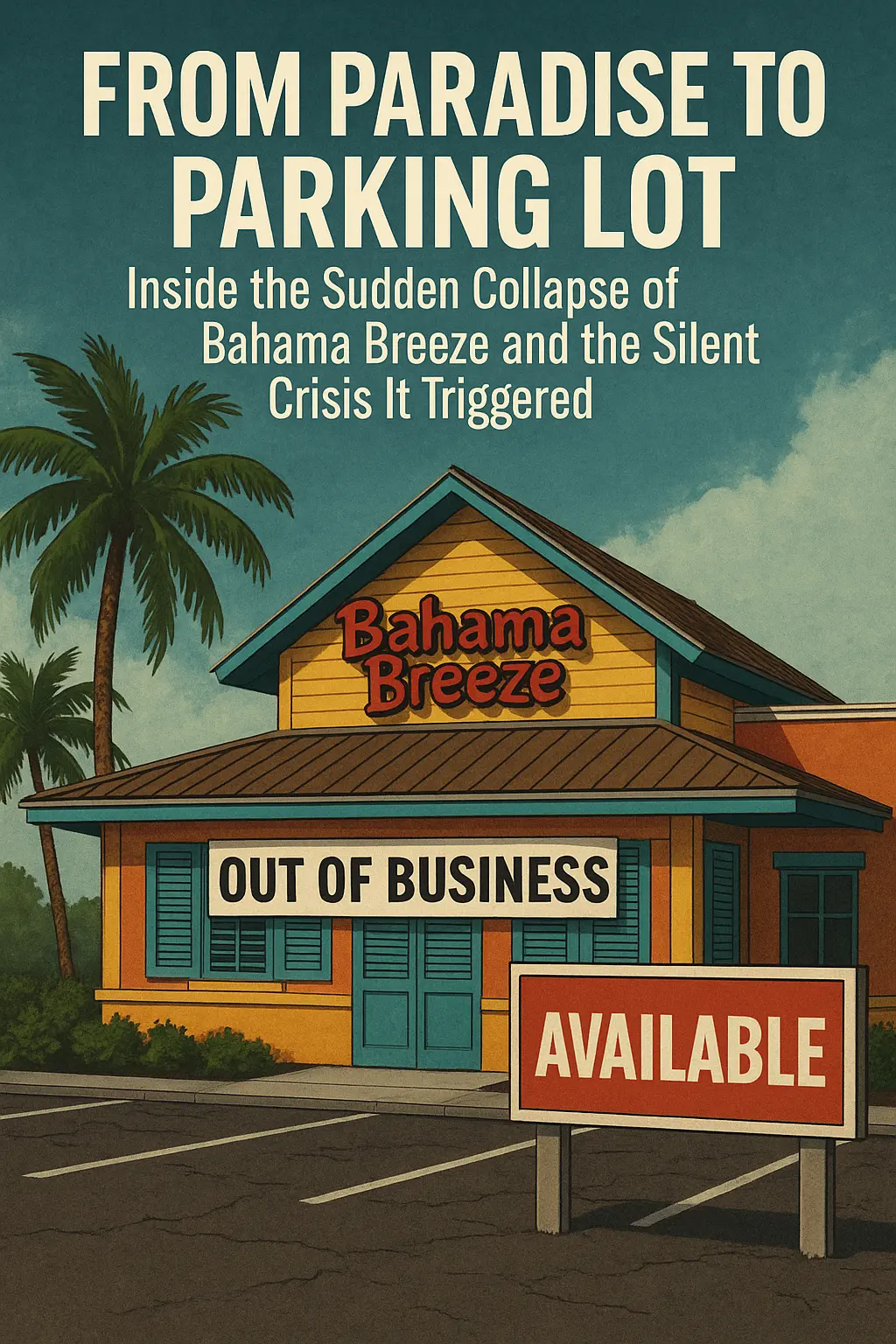
Once a colorful symbol of island escapism and steel drum rhythms, Bahama Breeze has gone quiet. In a move that shocked both casual diners and the industry, the Caribbean-themed restaurant chain — owned by dining giant Darden Restaurants — abruptly shuttered 15 of its locations across the U.S., slicing its national footprint by more than 30%.
But while headlines focus on closures, a deeper crisis brews beneath the surface — one that’s disrupting supply chains, hurting local musicians, and quietly erasing a flavorful cultural presence from the suburban American dining landscape.
💼 Vendors Left Adrift: The Fallout You Haven’t Heard
What happens when a restaurant chain that relies on daily seafood deliveries, tropical fruits, and Caribbean spices shuts down overnight?
In cities like Daytona Beach and Fort Myers, independent aquaculture farms are reporting sudden losses in bulk seafood orders, particularly mahi-mahi, shrimp, and conch. One supplier revealed, “We lost nearly 3,000 pounds in regular weekly orders the day they closed our local branch. No warning, no pivot.”
Local produce vendors in Florida and Georgia — previously tapped for fresh mangoes, plantains, and ginger — now scramble to find new buyers, many forced to slash prices or compost unsold inventory.
🎸 Steel Drums Go Silent: The Gig Economy Blow No One Tracked
Bahama Breeze wasn’t just a restaurant—it was a venue. A cultural experience with live reggae nights, steel drum performers, and weekend Caribbean music festivals that drew local crowds.
With 15 locations shuttered, dozens of artists are suddenly without work. Some had long-term performance slots booked for months in advance. Many of these musicians depended on Bahama Breeze as one of the few consistent employers of tropical and ethnic music in suburban areas.
This loss ripples outward: sound engineers, lighting crews, booking agents, and even small-scale caterers attached to events now face income gaps. Unlike mainstream gigs, these artists find fewer alternative venues in smaller cities.
🏢 From Rum Punch to Retail Space: What Happens to the Buildings?
Many of the closed Bahama Breeze locations were anchored in high-traffic zones — malls, retail plazas, and tourist corridors. The sudden vacancies are triggering a scramble among landlords to repurpose valuable real estate.
Several of these former tropical-themed spaces are already in talks for:
- Ghost kitchens supporting food delivery platforms like Uber Eats
- Boutique fitness centers or wellness clinics
- Urgent Care facilities, capitalizing on increased healthcare demands in suburban areas
In Paramus, NJ, one of the largest vacated Bahama Breeze locations is rumored to become a pet wellness and daycare center, reflecting the shift toward service-based leasing.
📉 Why It Really Shut Down: A Chain Out of Time
Darden has not released full financials specific to Bahama Breeze, but industry analysts point to three undeniable trends:
- 7.7% drop in same-store sales in 2024
- 12% spike in Caribbean-imported ingredient costs, due to disrupted shipping and supply chain turbulence
- Lack of delivery integration compared to competitors like Chipotle or Panda Express
Meanwhile, Darden’s other brands — Olive Garden and LongHorn Steakhouse — saw nearly 7% YOY growth, thanks to cost efficiency and better digital engagement.
In the age of TikTok food reviews, tropical dining has faded from Gen Z’s radar. “It just stopped feeling relevant,” said one 26-year-old former regular. “It was fun with family 10 years ago—but we order poke bowls now.”
🏝️ The Cultural Disappearance: Why This Hits Deeper Than Dining
Beyond economics, something more intangible is being lost: Caribbean cultural presence in American public life.
Bahama Breeze wasn’t “authentic” in a literal sense, but it introduced thousands of families to jerk chicken, coconut rice, and tropical music. For suburban towns from Ohio to Virginia, it was the only exposure to Caribbean flavor — food and music alike.
Now, with closures, that tiny but meaningful footprint is vanishing. Caribbean-American communities say this contributes to a larger “cultural shrinkage” in the face of homogenized casual dining trends. As one Jamaican-American chef posted on X:
“Say what you want, but Bahama Breeze kept our flavor alive outside Miami. This matters.”
🔮 What Comes Next? Darden’s Fork in the Road
According to internal sources and real estate filings, Darden is exploring two paths:
- Sell the brand entirely, offloading the remaining 29 units to private equity or a regional operator
- Convert select units into more profitable Olive Garden or LongHorn locations
Meanwhile, some entrepreneurial restaurateurs are already moving. A Caribbean-American food collective in Atlanta is in early talks to revive one shuttered location as a community-led Caribbean kitchen.
The story of Bahama Breeze isn’t just about 15 restaurants closing. It’s a tale of cultural retreat, economic disruption, and a changing American palate. It marks a broader shift away from mid-tier, experience-based dining—and the shrinking space left for diverse, tropical representation in everyday American life.
Where we once sipped mojitos under bamboo roofs, now stand empty lots—and silent stages.