

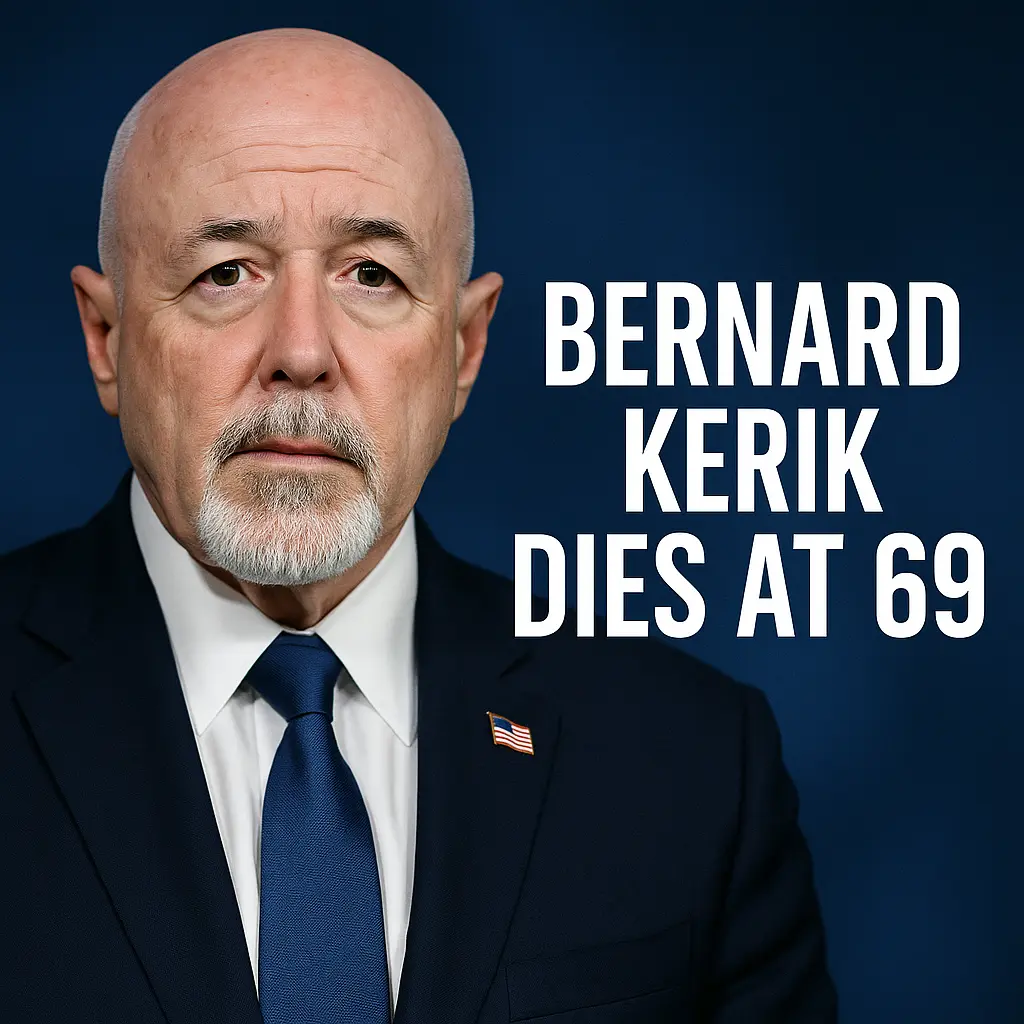
Bernard “Bernie” Kerik, the former New York City Police Commissioner best known for his visible leadership during the September 11 attacks, passed away at the age of 69. His death was confirmed by his family and close associates, including Rudy Giuliani, with whom he shared both a deep friendship and a controversial political journey. The cause, reported as cardiac-related, brings to a close a life that was as tumultuous as it was impactful.
Kerik’s passing has prompted a massive public reflection, not just on his role during America’s darkest day, but also on the complex chapters that followed—chapters involving federal charges, prison time, a presidential pardon, and a late-life return to political activism.
From NYPD’s Highest Rank to the Frontlines of 9/11
Bernard Kerik’s rise from humble beginnings to the top of New York’s police force is often described as meteoric. A high school dropout who served in the U.S. Army and later as a bodyguard in the Middle East, he joined the NYPD and ascended through the ranks to become Commissioner in 2000 under Mayor Rudy Giuliani. His national fame was cemented during the 9/11 terror attacks, where he was seen alongside Giuliani amid the rubble of the Twin Towers, helping orchestrate the city’s emergency response.
For many, Kerik became a face of strength and composure, receiving the praise of city residents and federal officials alike. His performance led to widespread speculation that he would rise even higher within the U.S. government.
The Collapse of a Homeland Security Nomination
In 2004, President George W. Bush nominated Kerik to lead the newly formed Department of Homeland Security. But within days, Kerik withdrew his name, citing the employment of an undocumented housekeeper. The explanation turned out to be only the surface. Investigations soon revealed deeper financial misconduct and ethics violations.
The incident shifted public perception. What was once an image of a post-9/11 hero was now complicated by accusations of fraud and deception. By 2009, Kerik had pleaded guilty to eight felony charges, including tax fraud and making false statements. He was sentenced to four years in federal prison—a rare fall from grace for a figure so recently celebrated.
Trump’s Pardon and the Post-Prison Chapter
In early 2020, Donald Trump issued a full presidential pardon to Bernard Kerik, wiping his record clean just as the 2020 election cycle was heating up. Kerik quickly returned to the political spotlight, supporting Trump’s efforts to contest the election results.
Alongside Giuliani, he played a role in collecting affidavits and documents to support false claims of election fraud. These activities would later come under investigation by federal authorities, including Special Counsel Jack Smith. Kerik, while never charged, complied with subpoenas and turned over critical documents during the January 6 investigation.
A Personal Bond With Rudy Giuliani That Defined an Era
Kerik and Rudy Giuliani’s relationship went far beyond professional boundaries. The two men often described one another as brothers, bonded not just by shared public service but by their ability to weather intense political storms together. Giuliani’s emotional reaction to Kerik’s death, calling it “a devastating loss of a warrior,” reflects that bond.
Together, their legacies are forever intertwined—heroes to some, controversial figures to others. What is undeniable is their lasting impact on modern American politics and crisis response.
Final Years and Public Reflection
In his final years, Kerik remained a vocal political commentator and advocate for criminal justice reform, shaped by his own experience behind bars. He was active on social media and frequently appeared on conservative news outlets. Despite his criminal past, he maintained a loyal base who admired his candor, resilience, and his unapologetic style.
His death has reignited debates over how history will remember Bernard Kerik. Was he the fearless NYPD leader who helped stabilize a city under siege? Or a cautionary tale of power, ambition, and legal missteps?
The truth likely lies somewhere in between. Bernard Kerik was a man of contradictions—a street cop turned commissioner, a felon turned advocate, a national hero turned political firebrand. His life, in all its twists and turns, serves as a stark reminder of how quickly legacies can shift in America’s public eye.