

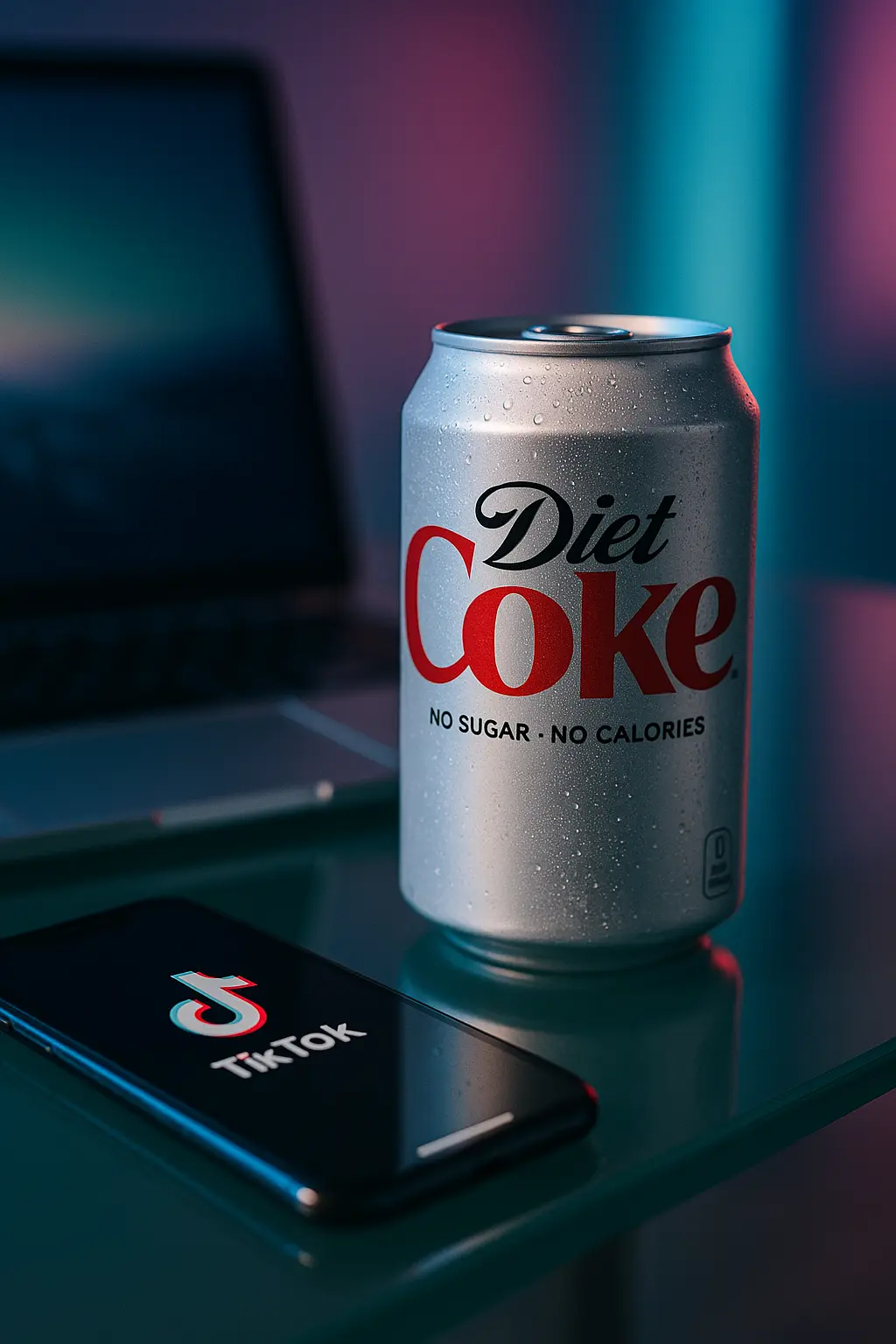
In a world increasingly divided by diet trends, caffeine preferences, and health consciousness, Diet Coke has emerged in 2025 not merely as a beverage but as a symbol of generational identity, office survival, and viral experimentation. From viral TikTok “dirty sodas” to controversial health debates, this zero-calorie cola is unexpectedly making headlines again — not because of what it is, but because of what it represents.
A Brand Built on Paradox
Launched in 1982 as a health-conscious alternative to traditional Coca-Cola, Diet Coke has long ridden the line between trend and taboo. For decades, it was associated with yuppie energy, office chic, and 90s minimalism. But over the years, it became the target of health watchdogs warning against artificial sweeteners like aspartame.
Fast forward to 2025, and Diet Coke’s paradox is precisely what’s fueling its resurgence. It’s both retro and rebellious, healthy-sounding yet chemically controversial — and somehow, that contradiction fits perfectly into the fragmented identity culture of today’s youth.
The TikTokification of Soda Culture
One of the biggest drivers of this trend is TikTok, where “dirty soda” recipes are going viral — wildly creative combinations of Diet Coke with ingredients like coconut milk, lime syrup, protein powder, jalapeños, or even pickled brine. Celebrities like Dua Lipa have even endorsed these oddball mixtures, leading to global food chains like Sonic adding customized versions to their menus.
But it’s not just about taste. These drinks are visually engaging, unpredictable, and highly personal — the exact traits that thrive on social platforms. “Making your own soda feels more expressive than ordering a latte,” says @thirstclubqueen, a TikTok creator with over 2 million followers who’s known for her weekly Diet Coke remixes. “It’s not about being healthy. It’s about making something your own.”
Office Drink or Obsession?
Interestingly, Diet Coke’s resurgence isn’t limited to teenagers. Among office workers and tech founders, it has quietly become a badge of hustle culture. High-profile figures like Elon Musk and Donald Trump have openly declared their Diet Coke addictions in the past. Now, remote workers are reviving that reputation — not as a diet tool, but as a “brain fuel” alternative to coffee.
Coca-Cola has leaned into this narrative, reviving its classic “Diet Coke break” campaign in 2025 with a modern twist. Instead of young professionals flirting at vending machines, today’s ads feature remote workers pulling all-nighters, graphic designers mixing soda mocktails, and influencers reaching for a cold can before podcast sessions.
Health Debate: The Sweetness Behind the Curtain
Of course, no comeback is without controversy. Recent studies have once again raised red flags about the health impact of artificial sweeteners. In 2023, the World Health Organization (WHO) classified aspartame — a key ingredient in Diet Coke — as “possibly carcinogenic,” while U.S.-based research linked regular consumption to heart rhythm irregularities and stroke risks.
Yet this has done little to slow its rise. If anything, the growing distrust of traditional nutritional advice is fueling more personal experimentation, and Diet Coke has oddly become a blank canvas for beverage hacking. Health-conscious consumers aren’t necessarily drinking it straight anymore — they’re mixing it with organic lime juice, sugar-free herbs, and natural electrolytes to neutralize its “synthetic” character.
A Soda for the Surveillance Age?
There’s also a subtler reason Diet Coke may be re-entering the zeitgeist: it’s one of the few mainstream products that still feels weirdly human. In a time when AI suggests what you drink, glucose monitors dictate your meals, and caffeine apps manage your energy levels, Diet Coke — full of contradiction, flaws, and flavor — feels refreshingly analog.
It doesn’t track your sugar spikes. It doesn’t measure your gut biome. It just fizzes, and tastes sweet — unapologetically so. That simplicity may be its most powerful modern marketing.
Global Ripples and Cultural Expansion
Diet Coke’s revival isn’t confined to the U.S. In India’s metros, for example, urban Gen Z audiences are increasingly embracing soda culture, blending Diet Coke with spices, herbs, and fruit infusions. In Japan, the “zero” craze has shifted attention from Coke Zero to Diet Coke among female professionals aged 25–40, citing its sleek aesthetic and lighter taste.
Even in traditionally tea-dominant cultures like the U.K. and Korea, soda bars have emerged in high-end malls, offering designer Diet Coke mocktails at prices rivalling craft cocktails — signaling a major cultural pivot from “diet” to “designed.”
Diet Coke in 2025 is not just about flavor or calories — it’s about identity, rebellion, and control. Its polarizing nature is precisely why it’s trending. Whether you see it as a nostalgic beverage, a chemical risk, or a creativity platform, the truth is: Diet Coke is back. But not as your mom’s diet drink — it’s your algorithm-proof daily rebellion.
Sources-